What is Personalized Learning? Your Guide to Tailored Education
August 24, 2026 14 min read 2,877 words
Unlock the power of education designed specifically for individual student needs, interests, and learning styles.
Explore Personalized Learning
Understanding the Core Principles of Personalized Education
 Photo: Katerina Holmes / Pexels
At its heart, understanding what is personalized learning means recognizing a fundamental shift from a traditional, one-to-many teaching model to a student-centric approach where the educational experience is specifically sculpted for each individual. This isn't merely about differentiation, which often means offering a few choices within a standard framework; personalized learning goes much deeper, aiming to create a unique learning journey for every student. The core principles revolve around several key tenets that empower learners and transform the role of the educator.
Firstly, it champions student agency. This means students are given a voice and choice in their learning journey, from selecting topics of interest to deciding on project formats or pacing. When students have a say, their intrinsic motivation skyrockets, leading to deeper engagement and better retention. They become active participants, not passive recipients, of knowledge. This sense of ownership is crucial for developing self-directed learners who can navigate challenges independently.
Secondly, personalized learning emphasizes competency-based progression. Unlike traditional systems where students advance based on seat time or age, this model allows students to move forward once they have demonstrated mastery of a concept or skill. If a student grasps a topic quickly, they can accelerate; if they need more time, they receive targeted support without being left behind. This ensures that foundational knowledge is solid before building upon it, preventing gaps that often accumulate in a conventional classroom. It fundamentally respects the natural variability in how humans learn.
Thirdly, it leverages flexible learning environments and resources. This doesn't necessarily mean every student is working in isolation. Rather, it implies that the physical space, digital tools, and instructional materials are adaptable to meet diverse needs. One student might thrive in a collaborative group, another might need quiet independent study, and a third might benefit from an online simulation. The environment is designed to support various learning styles and activities simultaneously. Technology plays a significant role here, providing access to a vast array of digital content, adaptive platforms, and communication tools that can cater to individual preferences and paces.
Fourthly, continuous data-driven insights are paramount. Personalized learning relies heavily on ongoing assessment – both formative and summative – to gather real-time data on student progress, strengths, and areas for improvement. This data isn't just for grading; it informs instruction, allowing teachers to make immediate adjustments to learning pathways, provide targeted interventions, or offer advanced challenges. This iterative process of assess-teach-adjust is what makes the learning truly personalized and responsive.
Finally, the role of the teacher evolves from a lecturer to a facilitator, mentor, and guide. Educators in personalized learning environments spend less time delivering whole-group instruction and more time working with small groups, coaching individual students, analyzing data, and designing bespoke learning experiences. They become experts in understanding individual student needs and curating resources to meet those needs. This shift requires a different set of skills and a deeper understanding of pedagogical approaches tailored to individual differences. Embracing these principles helps create a dynamic, responsive, and ultimately more effective educational experience for everyone involved. For a deeper dive into modern educational approaches, consider exploring
innovative teaching methods.
The Technology-Enhanced Toolkit of Personalized Learning
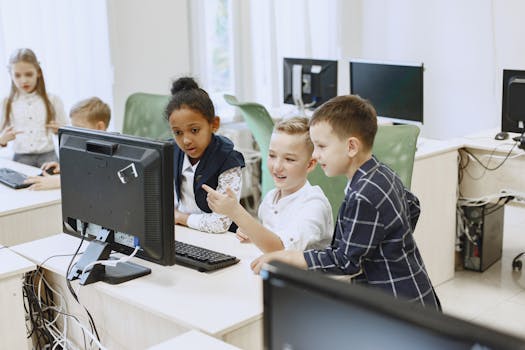 Photo: Gustavo Fring / Pexels
While the philosophy of personalized learning is rooted in sound pedagogical principles, its modern implementation is undeniably propelled forward by advancements in educational technology. Understanding what is personalized learning today often means understanding how technology serves as a powerful enabler, not a replacement for human connection. Technology provides the infrastructure and tools that make tailoring education at scale feasible and efficient, allowing educators to manage and respond to the diverse needs of many students simultaneously.
Adaptive learning platforms are perhaps the most recognizable technological component. These sophisticated software systems use algorithms to adjust the difficulty and type of content presented to a student based on their real-time performance. If a student masters a concept quickly, the platform presents more challenging material; if they struggle, it provides remedial exercises, different explanations, or additional practice. This dynamic responsiveness ensures that students are always working within their zone of proximal development, preventing both boredom from overly easy tasks and frustration from tasks that are too difficult. Examples include platforms for math, reading, and science that track progress and provide tailored feedback.
Learning Management Systems (LMS) like Canvas, Schoology, or Google Classroom are also central. These platforms organize curriculum, assignments, grades, and communication, making it easier for teachers to differentiate content and for students to access resources relevant to their individual learning paths. Teachers can upload diverse materials, assign specific tasks to different groups or individuals, and track engagement, all within a centralized system. Students can submit work, receive feedback, and collaborate with peers, often at their own pace and from various locations.
Data analytics tools are crucial for the data-driven aspect of personalized learning. These tools collect and process information about student performance, engagement patterns, time spent on tasks, and more. Educators can then visualize this data to identify trends, pinpoint areas where students are struggling collectively or individually, and make informed decisions about instructional adjustments. This goes beyond simple test scores, offering a holistic view of a student's learning trajectory. Predictive analytics can even flag students who might be at risk of falling behind, allowing for proactive intervention.
Digital content libraries and open educational resources (OER) provide an immense pool of diverse learning materials. Instead of relying on a single textbook, teachers can curate a personalized collection of videos, articles, interactive simulations, podcasts, and virtual labs that cater to different learning styles and interests. This breadth of resources allows for true customization, ensuring that every student can find material that resonates with them and helps them grasp complex concepts.
Finally, communication tools facilitate the crucial feedback loops necessary for personalized learning. Video conferencing, online discussion forums, and instant messaging allow for frequent, individualized communication between students and teachers, and even among peers. This enables timely support, clarification of doubts, and collaborative project work, fostering a sense of community even when students are working on individualized paths. The effective integration of these technologies empowers educators to create truly dynamic and responsive learning environments, making the vision of personalized education a tangible reality for more students across the nation.
Benefits and Challenges of Adopting Personalized Learning Models
 Photo: RDNE Stock project / Pexels
The widespread adoption of personalized learning models, while promising, comes with a unique set of benefits and challenges that educators, administrators, and policymakers must carefully consider. Understanding what is personalized learning means also understanding its potential to revolutionize education and the hurdles that need to be overcome for successful implementation.
One of the most significant benefits is increased student engagement and motivation. When learning is relevant, challenging but achievable, and aligned with individual interests, students are far more likely to invest themselves fully. This leads to deeper understanding, better retention of knowledge, and a more positive attitude towards schooling. Students who once felt disengaged in a one-size-fits-all classroom often thrive when given agency and a customized learning path. This model also fosters the development of critical 21st-century skills such as self-direction, critical thinking, problem-solving, and digital literacy, as students are actively involved in managing their own learning.
Another key advantage is improved academic outcomes. By allowing students to progress at their own pace and ensuring mastery before moving on, personalized learning helps close achievement gaps and ensures that all students build a strong foundation. Remediation can be provided precisely when and where it's needed, while advanced learners are challenged to explore topics in greater depth, preventing boredom and maximizing their potential. This leads to higher rates of academic success and prepares students better for higher education and future careers.
However, implementing personalized learning is not without its difficulties. A major challenge is the significant upfront investment required. This includes funding for robust technological infrastructure, adaptive learning platforms, and professional development for teachers. Transitioning from traditional teaching methods to a facilitator role demands extensive training and ongoing support for educators, which can be costly and time-consuming. Teachers need to learn how to effectively use data, curate diverse resources, manage differentiated instruction for multiple students simultaneously, and foster student agency effectively.
Another challenge is the need for rich and varied content. Personalized learning relies on having a broad spectrum of high-quality educational materials available to cater to diverse interests and learning styles. Developing or acquiring such a library can be resource-intensive. Furthermore, assessment practices need to evolve beyond traditional standardized tests to truly capture individual growth and mastery. Creating authentic, competency-based assessments that are fair and reliable across varied learning pathways is a complex task. For insights into overcoming systemic hurdles, exploring
strategies for educational reform can be beneficial.
Finally, ensuring equity and access is a crucial consideration. While technology can be an equalizer, the digital divide remains a concern. Not all students have reliable internet access or personal devices at home, which can exacerbate existing inequalities if not addressed proactively. Schools must ensure equitable access to technology and resources for all students, regardless of their socioeconomic background. Despite these challenges, the potential for personalized learning to create more effective, engaging, and equitable educational experiences makes it a compelling model for the future of education.
Implementing Personalized Learning: Best Practices and Common Pitfalls
 Photo: Mikhail Nilov / Pexels
Successfully implementing personalized learning requires careful planning, a clear vision, and a commitment to continuous improvement. While the benefits are substantial, many initiatives falter due to common pitfalls. Understanding these and adopting best practices can pave the way for a truly transformative educational experience.
**Best Practices for Implementation:**
* **Start Small, Scale Smart:** Don't try to overhaul the entire school system overnight. Begin with a pilot program in a few classrooms or a single grade level. Learn from these initial efforts, gather feedback, and iterate before expanding. This allows for refinement of strategies and builds internal capacity.
* **Invest Heavily in Professional Development:** Teachers are the linchpin. Provide comprehensive training not just on technology tools, but on the pedagogical shifts required. Focus on data analysis, differentiated instruction, fostering student agency, and creating a flexible learning environment. Ongoing coaching and peer collaboration are essential.
* **Foster a Culture of Collaboration:** Encourage teachers to share best practices, challenges, and solutions. Create opportunities for interdisciplinary teams to design personalized projects. Extend collaboration to students, allowing them to learn from and teach each other.
* **Involve All Stakeholders:** Engage parents, students, administrators, and the community in the vision and implementation process. Communicate the 'why' behind personalized learning clearly and regularly. Their understanding and support are critical for success.
* **Prioritize Data Literacy:** Equip both teachers and students with the skills to understand and utilize learning data. Teachers need to interpret analytics to adjust instruction, and students need to understand their own progress and set goals based on evidence.
* **Embrace Flexibility in Curriculum and Space:** Move away from rigid schedules and fixed classroom layouts. Design learning spaces that support various activities – individual work, small group collaboration, and direct instruction. Be open to adapting curriculum to student interests where appropriate.
**Common Pitfalls to Avoid:**
* **Technology Overdrive Without Pedagogy:** Simply providing every student with a device or an adaptive platform without a clear pedagogical purpose will not lead to personalized learning. Technology must serve the learning goals, not dictate them.
* **Lack of Teacher Buy-in and Training:** Without adequate support and understanding, teachers can feel overwhelmed and resist the change. This is often the biggest barrier to successful implementation.
* **Confusing Personalization with Individualization:** While related, they are distinct. Individualization might mean everyone works alone on their own path. Personalization still allows for collaboration, direct instruction, and social learning, but the *overall* journey is tailored.
* **Over-reliance on Standardized Tests:** Personalized learning thrives on diverse assessment methods that truly measure mastery and growth. If the primary measure of success remains high-stakes standardized tests, it can stifle genuine personalization.
* **Ignoring Equity Concerns:** Failing to address the digital divide or provide equitable access to resources for all students can exacerbate existing inequalities and undermine the core promise of personalized learning.
* **Lack of Clear Vision and Goals:** Without a shared understanding of what personalized learning looks like in practice and what specific outcomes are desired, efforts can become fragmented and lose focus.
By proactively addressing these challenges and embracing best practices, schools and districts can effectively transition to personalized learning models, creating more engaging, equitable, and effective educational experiences for all students.
