What is Personalized Learning Education? Your Guide
personalized learning education

What is Personalized Learning Education? Your Guide

Unlocking each student's unique potential through tailored educational paths and adaptive strategies.

Explore Personalized Learning

Key Takeaways

  • ✓ Personalized learning focuses on individual student needs, interests, and learning styles.
  • ✓ It often leverages technology to adapt content and pace for each learner.
  • ✓ Students take a more active role in their educational journey.
  • ✓ Goals include deeper understanding, increased engagement, and improved academic outcomes.

How It Works

1
Assessment & Profile Creation

Initial assessments identify a student's strengths, weaknesses, interests, and preferred learning styles. This data forms a unique learning profile for each individual.

2
Customized Learning Paths

Educators, often with technological support, design a tailored curriculum and set specific learning goals. The pace, content, and methods are adapted to the student's profile.

3
Engaged & Self-Directed Learning

Students actively participate in their learning process, making choices about how and what they learn. They receive timely feedback and can progress at their optimal speed.

4
Continuous Monitoring & Adjustment

Progress is regularly tracked through various assessments and observations. The learning path is continuously adjusted based on student performance and evolving needs.

Understanding the Core Principles of Individualized Instruction
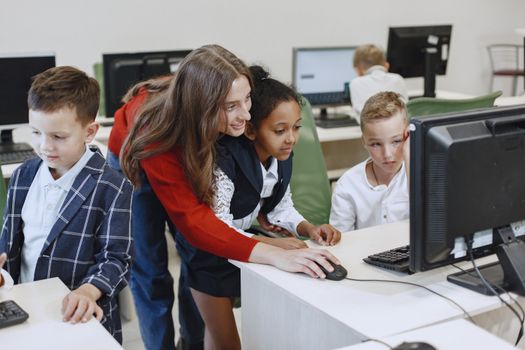
Teacher engaging with diverse children in a technology lesson using computers in a modern classroom. Photo: Gustavo Fring / Pexels
At its heart, personalized learning education is a pedagogical approach that fundamentally shifts the focus from a one-size-fits-all model to one that prioritizes the individual student. It's not merely about differentiating instruction for a group; it's about creating a unique learning experience for each and every student. This paradigm recognizes that every learner brings a distinct set of prior knowledge, experiences, interests, and learning preferences to the classroom. Consequently, effective learning cannot be achieved by delivering the same content, at the same pace, and in the same manner to everyone. Instead, personalized learning seeks to tailor the educational experience to meet these individual needs, fostering deeper engagement, greater understanding, and ultimately, improved academic outcomes. The core principles underpinning individualized instruction include student agency, competency-based progression, flexible learning environments, and the strategic use of technology. Student agency empowers learners to take ownership of their education, giving them a voice in what and how they learn. This might involve choosing projects that align with their interests, setting personal learning goals, or selecting resources that resonate with their learning style. Competency-based progression means that students advance when they have demonstrated mastery of a concept, rather than simply moving on because a certain amount of time has passed. This ensures a solid foundation of knowledge and skills before tackling more complex material. Flexible learning environments adapt to the needs of the learner, offering various modalities of instruction, group work, individual exploration, and access to diverse resources. Technology plays a crucial role in enabling many of these principles, providing adaptive learning platforms, personalized feedback mechanisms, and tools for students to track their own progress. By embracing these principles, educators can cultivate an environment where every student feels seen, supported, and challenged to reach their full potential. This comprehensive approach differentiates personalized learning from traditional methods, emphasizing a profound respect for the learner's unique journey. For more insights into broader educational trends, explore resources on modern education approaches.

How Technology Drives Adaptive Learning and Customization

The advent and widespread integration of educational technology have been monumental in making personalized learning education a scalable and practical reality. Before sophisticated software and robust online platforms, true individualization was often resource-intensive, requiring extensive one-on-one time with educators, which was rarely feasible in a typical classroom setting. Today, technology acts as a powerful enabler, providing tools and systems that can analyze student data, adapt content in real-time, and offer tailored support on an unprecedented scale. Adaptive learning platforms, for instance, are designed to continuously assess a student's performance, identify areas of strength and weakness, and then dynamically adjust the learning path, content difficulty, and instructional strategies to match the student's current needs. If a student masters a concept quickly, the system can provide more challenging material; if they struggle, it can offer additional explanations, practice problems, or alternative learning resources. Beyond adaptive content delivery, technology facilitates customization in numerous other ways. Learning management systems (LMS) allow educators to curate diverse resources, assign differentiated tasks, and provide individualized feedback efficiently. Digital portfolios enable students to document their learning journey, reflect on their progress, and showcase their work in a personalized manner. Virtual reality (VR) and augmented reality (AR) can create immersive, experiential learning environments tailored to specific interests or learning styles. Artificial intelligence (AI) is also playing an increasingly significant role, from intelligent tutoring systems that offer human-like guidance to predictive analytics that can identify students at risk of falling behind, allowing for proactive intervention. These technological advancements empower both educators and students, transforming the classroom into a dynamic, responsive ecosystem where learning is truly student-centered. Teachers can leverage data insights to make informed decisions, while students gain access to a wealth of resources and learning modalities that cater to their unique requirements, making the educational process far more engaging and effective. The seamless integration of these tools ensures that the personalized learning experience is not just a theoretical ideal but a tangible, daily reality.

The Benefits and Challenges of Implementing Personalized Education

Implementing personalized learning education offers a plethora of compelling benefits for students, educators, and the education system as a whole. For students, the most significant advantage is the ability to learn at their own pace, ensuring mastery of concepts before moving on. This reduces frustration, builds confidence, and fosters a deeper understanding of the subject matter. Increased engagement is another key benefit, as students are more invested when the learning material is relevant to their interests and presented in a way that suits their style. This often leads to improved academic performance, better retention of information, and the development of crucial 21st-century skills such as critical thinking, problem-solving, and self-direction. Furthermore, personalized learning can help address equity gaps by providing targeted support to students who might otherwise fall behind in a standardized system. Educators, in turn, gain richer insights into individual student progress, allowing them to provide more effective and timely interventions. It also shifts their role from mere content deliverers to facilitators of learning, coaches, and mentors, fostering stronger student-teacher relationships. Schools can see improved student outcomes and a more dynamic, innovative learning environment. However, the transition to personalized education is not without its challenges. One major hurdle is the initial investment in technology infrastructure and professional development for educators. Teachers require training in new pedagogical approaches, data analysis, and the effective use of personalized learning platforms. Curriculum redesign can also be a complex and time-consuming process, requiring a shift from traditional textbooks to a more modular, resource-rich approach. Data privacy concerns are paramount when collecting and analyzing student data, necessitating robust security measures and clear policies. Ensuring equitable access to technology and resources for all students, regardless of socioeconomic background, is another critical consideration. Moreover, the shift can sometimes be met with resistance from stakeholders accustomed to traditional methods, requiring clear communication and demonstration of benefits. Despite these challenges, the long-term benefits of fostering truly individualized, engaging, and effective learning experiences often outweigh the initial difficulties, paving the way for a more impactful educational future. For a broader view on systemic changes, consider exploring innovations in education policy.

Strategies for Successful Personalized Learning Implementation

Successful implementation of personalized learning education requires a thoughtful and strategic approach, moving beyond simply adopting new technology. Here are key strategies to consider: * **Start Small and Scale Up:** Rather than overhauling the entire system at once, begin with a pilot program in a few classrooms or subjects. This allows educators to test approaches, gather feedback, and refine strategies before broader implementation. * **Prioritize Professional Development:** Invest heavily in training for teachers. This isn't just about learning new software; it's about shifting pedagogical mindsets, understanding data-driven instruction, and mastering new classroom management techniques for diverse learning paths. Ongoing support and collaborative learning opportunities are crucial. * **Foster a Culture of Collaboration:** Encourage teachers to share best practices, challenges, and solutions. A collaborative environment helps build collective expertise and makes the transition less isolating for individual educators. Include students and parents in discussions to gain their perspectives. * **Clearly Define Learning Objectives and Competencies:** Before personalizing, be clear about what students need to know and be able to do. A competency-based framework provides the necessary structure for individualized progression and assessment. * **Leverage Technology Wisely:** Select tools that genuinely support personalized learning goals, rather than just adding technology for its own sake. Ensure platforms are user-friendly, integrate well, and provide actionable data insights for both teachers and students. * **Empower Student Voice and Choice:** Give students opportunities to make decisions about their learning, whether it's choosing project topics, learning resources, or demonstrating mastery. This builds ownership and intrinsic motivation. * **Develop Robust Assessment Strategies:** Move beyond traditional summative tests. Implement formative assessments, project-based learning, portfolios, and self-assessments to get a holistic view of student progress and understanding. * **Communicate Effectively with Stakeholders:** Clearly articulate the 'why' behind personalized learning to parents, students, and the wider community. Address concerns and celebrate successes to build support and understanding. By focusing on these strategies, schools can navigate the complexities of personalized learning and create a truly transformative educational experience for every student, moving beyond merely 'what is personalized learning education' to 'how we make it work effectively'.

Comparison

FeaturePersonalized LearningTraditional LearningDifferentiated Instruction
PaceStudent-drivenFixed, whole-classFlexible within class
ContentTailored to individualStandardized curriculumVaried materials, same goals
Student RoleActive, self-directedPassive recipientEngaged, but teacher-led
Technology UseIntegral, adaptiveSupplementalSupportive, not core
AssessmentFormative, competency-basedSummative, standardizedVaried, but often summative
Teacher RoleFacilitator, coachInstructor, lecturerManager, planner
EngagementHighVariableModerate to High
FocusIndividual masteryContent coverageMeeting diverse needs

What Readers Say

"My son used to dread school, but with personalized learning, he's thriving. He gets to pursue topics he genuinely cares about, and his confidence has soared. It truly changed his outlook on what is personalized learning education for him."

Sarah J. · Austin, TX

"As an educator, personalized learning has transformed my classroom. I can finally meet each student where they are, providing targeted support and challenges. It's more work upfront, but the student outcomes are incredible."

Mark D. · Seattle, WA

"Our school implemented a personalized learning model, and we saw a 15% increase in student retention and a significant improvement in test scores within two years. It's a game-changer for academic achievement."

Emily R. · Boston, MA

"While personalized learning has immense benefits, it requires a lot of dedication from teachers and can be resource-intensive. The results are worth it, but schools need to be prepared for the investment in time and training."

David K. · Denver, CO

"My daughter has a unique learning style, and traditional schooling always left her feeling frustrated. Personalized learning allowed her to explore subjects through projects she loved, making education fun and effective for her."

Maria S. · Miami, FL

Frequently Asked Questions

What is personalized learning education in simple terms?

Personalized learning education is an approach where each student's learning experience is uniquely tailored to their individual needs, interests, and learning styles. It aims to provide the right content, at the right pace, with the right support, to help every student succeed and reach their full potential, rather than following a one-size-fits-all curriculum.

Is personalized learning just another education fad?

No, personalized learning is not just a fad; it represents a significant shift in pedagogical thinking backed by research on how individuals learn best. While implementation methods evolve with technology, the core philosophy of student-centered, individualized instruction has deep roots in educational theory and is gaining widespread adoption due to its proven benefits in engagement and outcomes.

How do teachers manage personalized learning with many students?

Teachers manage personalized learning through strategic use of technology, flexible grouping strategies, and a shift in their role from lecturer to facilitator. Adaptive learning platforms assist with content delivery and assessment, while teachers focus on small group instruction, one-on-one coaching, and fostering a collaborative, self-directed learning environment. Effective planning and data analysis are key.

What is the cost associated with personalized learning education?

The cost of personalized learning education can vary significantly. Initial investments often include technology infrastructure (devices, software licenses), professional development for staff, and curriculum redesign. While there can be upfront costs, many argue that the long-term benefits, such as improved student outcomes, reduced remediation needs, and increased engagement, provide a strong return on investment for schools and districts.

How does personalized learning differ from differentiated instruction?

While both aim to meet student needs, personalized learning is broader and more deeply individualized. Differentiated instruction typically involves a teacher offering different ways for students to access content, process information, or demonstrate learning within a common classroom goal. Personalized learning, conversely, means the *entire learning path* (goals, content, pace, and assessment) is unique to each student, often leveraging technology for adaptive pathways.

Who benefits most from personalized learning education?

All students can benefit from personalized learning, but it is particularly impactful for students who are either significantly ahead or behind their peers, those with diverse learning styles, or students with specific learning challenges. It allows advanced learners to accelerate and delve deeper, while providing struggling learners with the targeted support and time they need to master concepts, ensuring no one is left behind.

Are there any privacy concerns with personalized learning data?

Yes, privacy is a significant concern with personalized learning, as it often involves collecting detailed student data on performance, interests, and progress. Schools and technology providers must implement robust data security measures, adhere to strict privacy regulations (like FERPA in the US), and maintain transparent policies regarding data collection, storage, and use. Consent and clear communication with parents are essential.

What is the future outlook for personalized learning education?

The future outlook for personalized learning education is very promising. As educational technology continues to advance, particularly with AI and machine learning, personalized learning environments will become even more sophisticated, intuitive, and accessible. Expect greater integration of immersive technologies, more refined adaptive content, and a continued emphasis on developing critical thinking, creativity, and self-directed learning skills essential for future success.

Embrace the future of education by understanding what is personalized learning education and how it can unlock every student's potential. Explore how tailored learning journeys lead to deeper engagement and superior academic outcomes. Start your journey towards a more effective and equitable education system today.

Topics: personalized learning educationindividualized instructionstudent-centered learningadaptive learningeducation technology
Leo List
Brampton weed
Adultwork