
Engaging STEM Activities for Preschoolers: Building Bright Futures

Children engaged in play with toys and an educator in a kindergarten setting.Photo: Pavel Danilyuk / Pexels

Engaging STEM Activities for Preschoolers: Building Bright Futures

Unlock your child's potential with playful, hands-on STEM experiences designed for their developing minds.

Explore Activities Now!

Key Takeaways

  • ✓ Early exposure to STEM boosts problem-solving and critical thinking.
  • ✓ Hands-on activities are crucial for preschooler engagement and learning.
  • ✓ STEM is not just for older kids; foundational concepts can be introduced playfully.
  • ✓ Simple household items are often all you need for effective STEM activities.

How It Works

1
Observe & Question

Encourage your child to look closely at the world around them and ask 'why' or 'how'. This sparks natural curiosity, the first step in scientific inquiry.

2
Explore & Experiment

Provide open-ended materials and allow children to manipulate them freely. Guide them to test ideas and see what happens, fostering hands-on learning.

3
Predict & Reflect

Ask your child what they think will happen before an activity and what they observed afterward. This helps them connect cause and effect and articulate their findings.

4
Connect & Create

Relate STEM concepts to everyday life and encourage creative problem-solving. This reinforces learning and shows the practical application of STEM principles.

The Power of Early Childhood STEM Education
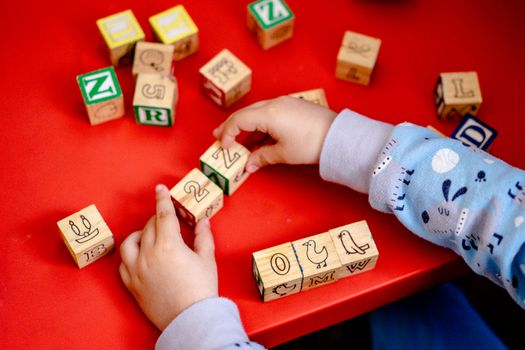
Young child engaging with wooden alphabet blocks on a vibrant red table, learning and playing.Photo: Atlantic Ambience / Pexels
In an increasingly technological world, providing children with an early foundation in Science, Technology, Engineering, and Mathematics (STEM) is more crucial than ever. For preschoolers, STEM isn't about memorizing complex formulas or understanding advanced theories; it's about fostering natural curiosity, encouraging exploration, and developing essential problem-solving skills through play. Think of it as planting seeds for future innovation and critical thinking. When young children engage in STEM activities, they're not just playing; they're actively building neural pathways that support logical reasoning, spatial awareness, and a growth mindset. They learn to ask questions, hypothesize, test ideas, and observe outcomes – all fundamental aspects of scientific inquiry. This early exposure helps demystify these subjects and builds confidence, making them less intimidating as children progress through their educational journey. Moreover, early childhood STEM activities are inherently hands-on, which aligns perfectly with how preschoolers learn best. Their world is tactile, sensory, and experiential. Whether they're stacking blocks, mixing colors, or observing insects, they are engaging in rudimentary scientific and engineering principles. These experiences build a robust framework for understanding the world around them. For instance, stacking blocks introduces concepts of balance, gravity, and structural integrity. Mixing colors teaches about properties of matter and observation. Watching a seed sprout demonstrates life cycles and growth. These aren't just isolated lessons; they're interconnected experiences that build a holistic understanding. By integrating STEM into daily play, we're not only preparing children for academic success but also nurturing their innate sense of wonder and empowering them to become active participants in shaping their future. It's about instilling a lifelong love of learning and discovery, making STEM accessible and exciting from the very beginning. This foundational work is invaluable, setting the stage for more complex learning later on and ensuring that children view challenges as opportunities for exploration rather than obstacles. The benefits extend beyond academic achievement, fostering creativity, resilience, and collaborative skills that are vital in all aspects of life.

Engaging Science Explorations for Little Learners

A teacher and student engage in a hands-on science experiment in a classroom setting.Photo: Mikhail Nilov / Pexels
Science for preschoolers is all about discovery and observation. It’s about igniting that spark of curiosity that makes them wonder, “How does that work?” or “What will happen if…?” Simple science experiments using everyday materials can provide profound learning experiences. For example, a classic baking soda and vinegar volcano teaches about chemical reactions, gas production, and cause-and-effect in a visually exciting way. Children can observe the fizz, feel the bubbles, and even predict the eruption. Another fantastic activity involves exploring the properties of water. Provide various containers, droppers, and sponges. Children can experiment with transferring water, observing how it flows, absorbs, and takes the shape of its container. This introduces concepts like volume, absorption, and the states of matter in a playful, low-stakes environment. Nature walks are also incredible science opportunities. Encourage children to collect leaves, rocks, or flowers. Back indoors, they can sort these items by color, size, or texture, practicing classification skills. Magnifying glasses can transform tiny objects into fascinating worlds, enhancing observation skills. Discussing the weather – observing clouds, rain, or sunshine – introduces meteorology in an accessible way. Even simple activities like dissolving sugar or salt in water demonstrate solubility. The key is to make these explorations open-ended, allowing children to lead with their questions and interests. Instead of providing all the answers, guide them to discover the answers themselves through hands-on engagement. This approach not only teaches scientific concepts but also cultivates a scientific mindset – the ability to observe, question, experiment, and draw conclusions. These early science explorations are not about memorizing facts; they are about fostering a love for discovery and understanding the natural world, laying essential groundwork for future scientific literacy. Remember, the 'wow' factor is a powerful learning tool for this age group, so choose activities that are visually stimulating and encourage active participation, turning every discovery into a memorable learning moment.

See also: Choose sex toy by intensity.

Hands-On Math and Engineering Challenges

Young child engaging with wooden alphabet blocks on a vibrant red table, learning and playing.Photo: Atlantic Ambience / Pexels
Introducing math and engineering to preschoolers doesn't require textbooks or complex formulas; it involves playful engagement with numbers, shapes, patterns, and construction. For math, focus on foundational concepts like counting, sorting, recognizing shapes, and understanding quantity. Using everyday objects like blocks, toys, or even snacks, children can practice one-to-one correspondence by counting items, or sort them by attributes like color, size, or type. Creating simple patterns with beads, blocks, or even their own bodies (e.g., clap-stomp-clap-stomp) introduces algebraic thinking. Shape recognition can be made fun through scavenger hunts to find circles, squares, and triangles in their environment, or by using shape sorters and puzzles. Baking or cooking together offers practical math applications, such as measuring ingredients, understanding fractions (half a cup), and counting items. These activities make math tangible and relevant, moving beyond abstract numbers to real-world applications. Engineering for preschoolers is all about building, designing, and problem-solving. This can be as simple as providing a variety of materials – cardboard boxes, pipe cleaners, craft sticks, tape – and challenging them to build the tallest tower, a bridge for their toys, or a shelter for a stuffed animal. These open-ended construction tasks encourage creativity, spatial reasoning, and an understanding of structural stability. They learn through trial and error, discovering what works and what doesn't. Asking questions like, “How can we make this stronger?” or “What if we use a different shape?” guides their thinking without dictating the solution. Simple machines can also be explored: create a ramp with a piece of cardboard and roll cars down it to demonstrate gravity and incline. Use pulleys made from string and a paper towel roll to lift light objects, introducing the concept of mechanical advantage. These hands-on engineering challenges not only develop fine motor skills and hand-eye coordination but also foster persistence, critical thinking, and a sense of accomplishment. They learn that failure is a part of the process, and that iterating on ideas leads to better solutions. This early exposure to design and problem-solving is crucial for developing innovative thinkers. For more resources on integrating playful learning, consider exploring resources focused on creative early education.

Tips for Successful STEM Activities and Common Pitfalls to Avoid

A young girl enjoying an educational moment with a vibrant abacus, teaching counting and fun.Photo: Yan Krukau / Pexels
To maximize the learning potential of STEM activities for preschoolers, consider these practical tips and common pitfalls. **Tips for Success:** * **Keep it Playful and Child-Led:** The most effective STEM activities are those that feel like play. Follow your child's interests and allow them to explore at their own pace. If they're fascinated by bugs, explore entomology; if they love building, focus on engineering challenges. * **Use Open-Ended Materials:** Provide materials that can be used in multiple ways – blocks, loose parts, water, sand, natural items. This encourages creativity and diverse problem-solving approaches rather than a single 'right' answer. * **Ask Open-Ended Questions:** Instead of telling them what's happening, ask questions like, "What do you think will happen next?" "Why do you think it did that?" or "How could we make it different?" This promotes critical thinking and verbalization of their observations. * **Embrace the Mess:** Many of the best STEM activities are messy. Prepare your space with drop cloths or do activities outdoors to reduce stress over spills and encourage full engagement. * **Connect to Real Life:** Point out STEM concepts in their everyday environment. "Look, that bridge is an example of engineering!" or "We're measuring the ingredients, just like scientists!" This makes learning relevant. * **Document and Celebrate:** Take photos or videos of their discoveries. Celebrate their efforts, even if the outcome wasn't what they expected. The process of exploration is more important than the perfect result. **Common Pitfalls to Avoid:** * **Over-Directing:** Don't dictate every step. Allow children to experiment, make mistakes, and discover solutions independently. Too much adult intervention can stifle curiosity. * **Focusing on the 'Right' Answer:** STEM for preschoolers is about the process of inquiry, not getting the correct answer. Avoid making it feel like a test. Embrace unexpected outcomes as learning opportunities. * **Using Complex Language:** Explain concepts in simple, age-appropriate terms. Avoid jargon that might confuse or disengage them. * **Lack of Safety Precautions:** Always supervise activities, especially those involving small parts, liquids, or potential hazards. Ensure materials are non-toxic and age-appropriate. * **Making it a Chore:** If an activity feels forced or uninteresting to the child, it's okay to pivot or try again another day. Learning should be enjoyable. * **Ignoring Their Interests:** Trying to force a science experiment on a child who is clearly more interested in building can lead to disengagement. Meet them where their curiosity lies. By keeping these tips in mind, you can create a rich, stimulating environment where preschoolers naturally develop essential STEM skills and a lifelong love for learning and discovery.

Comparison

FeatureDIY Household STEMSpecialized STEM KitsPreschool STEM Classes
CostVery LowModerate to HighModerate to High (per session)
FlexibilityVery High (anytime, anywhere)Medium (limited by kit contents)Low (fixed schedule)
Parent/Caregiver InvolvementHigh (active participation needed)Medium (assembly/guidance)Low (supervised by instructor)
Skill FocusBroad, adaptableTargeted, specific skillsStructured curriculum
Engagement LevelCan be very high (child-led)High (novelty factor)High (group interaction)
MaterialsReadily availableSpecific, includedProvided
Spontaneity
Structured Learning

What Our Readers Say

5 ★★★★★

"These STEM activities transformed our daily routine! My 4-year-old now asks 'why' about everything and loves experimenting with water and food coloring. It's amazing to see his little mind at work."

5 ★★★★★

"As an engineer, I wanted to introduce STEM early, but in a fun way. This guide provided so many accessible ideas. We built a 'mega tower' out of cardboard boxes, and his problem-solving skills really shone through."

5 ★★★★★

"My daughter was struggling with counting, but after incorporating some of these math-focused play ideas, she's now enthusiastically counting everything around the house. The hands-on approach made all the difference!"

4 ★★★★☆

"The science experiments were a huge hit, especially the baking soda volcano! Some of the engineering challenges were a bit advanced for my 3-year-old, but we modified them, and she still had a blast. Very helpful overall."

5 ★★★★★

"We're a homeschooling family, and incorporating these STEM activities has added so much richness to our preschool curriculum. It's not just learning; it's genuine discovery and joy for my son."

Frequently Asked Questions

What are the best STEM activities for preschoolers?
The best STEM activities for preschoolers are hands-on, open-ended, and align with their natural curiosity. Simple experiments like baking soda volcanoes, building with blocks or loose parts, exploring water properties, and sorting natural objects are highly effective and engaging for this age group.
Is STEM too advanced for preschoolers?
No, STEM is not too advanced for preschoolers. It's introduced in an age-appropriate way through play and exploration, focusing on foundational concepts like observation, problem-solving, counting, and cause-and-effect. It nurtures their innate curiosity rather than teaching complex theories.
How can I easily incorporate STEM into our daily routine?
You can easily incorporate STEM by asking 'why' questions, pointing out patterns in nature, involving them in simple cooking tasks (measuring), building with household items, or observing changes in weather. Turn everyday moments into learning opportunities with open-ended questions and materials.
Do I need special equipment for preschool STEM activities?
No, you absolutely do not need special equipment. Many effective STEM activities can be done with common household items like cardboard boxes, water, baking soda, vinegar, dry pasta, blocks, natural materials (leaves, rocks), and measuring cups. The focus is on the process, not expensive tools.
How do STEM activities benefit a preschooler's development compared to traditional play?
While traditional play is vital, STEM activities specifically target and enhance critical thinking, problem-solving, spatial reasoning, early math and science literacy, and fine motor skills. They encourage hypothesis testing and observation, fostering a scientific mindset that complements imaginative and social play.
Who should engage in STEM activities for preschoolers?
Anyone involved in a preschooler's care and education – parents, grandparents, caregivers, and preschool teachers – should engage in these activities. It's about creating a rich learning environment and fostering curiosity through interaction and guided exploration.
Are there any safety concerns with STEM activities for young children?
Yes, safety is paramount. Always supervise children during activities, especially those involving small parts (choking hazard), liquids, or potential allergens. Ensure all materials are non-toxic and age-appropriate. Always prioritize a safe environment for exploration.
What is the future trend for STEM education in early childhood?
The future trend for early childhood STEM education is towards more integrated, play-based, and interdisciplinary approaches. There will be an increased emphasis on computational thinking skills introduced through unplugged activities, robotics, and coding, alongside traditional science and engineering concepts, all within a playful context.

Ignite your child's natural curiosity and lay a strong foundation for future learning with these engaging STEM activities for preschoolers. Start exploring today and watch their love for science, technology, engineering, and math blossom. Empower their bright future, one playful discovery at a time!

Topics: STEM activities for preschoolersearly childhood STEMpreschool science experimentsmath for preschoolersengineering for kids
Leo List