✓ Early exposure to STEM builds critical thinking and problem-solving skills.
✓ Preschool STEM activities are typically hands-on, play-based, and child-led.
✓ You don't need expensive materials; many activities use household items.
✓ Focus on the process of discovery, not just the end result.
How It Works
1
Observe & Question
Encourage your child to look closely at the world around them and ask 'why' or 'how'. This sparks their natural curiosity.
2
Hypothesize & Plan
Before starting an activity, ask your child what they think will happen. Help them think through simple steps or predictions.
3
Experiment & Explore
Engage in the hands-on activity, allowing your child to manipulate materials and test their ideas. Provide guidance, but let them lead.
4
Reflect & Discuss
After the activity, talk about what happened, what they learned, and what they might do differently next time. Reinforce their discoveries.
Why Early Childhood STEM Education Matters: Building Foundations
Photo: RDNE Stock project / Pexels
In today's rapidly evolving world, the importance of foundational skills in Science, Technology, Engineering, and Mathematics (STEM) cannot be overstated. For preschoolers, STEM isn't about memorizing complex formulas or understanding advanced concepts; it's about nurturing their innate curiosity, developing critical thinking, and fostering a love for discovery through play. Early childhood is a critical period for brain development, and introducing STEM activities at this age lays a robust groundwork for future academic success and lifelong learning. When we talk about early childhood education, integrating STEM means creating environments where children can explore, experiment, and solve problems in a joyful and engaging way. These early experiences help children develop vital cognitive skills such as observation, classification, prediction, and spatial reasoning. They learn to ask questions, hypothesize, test their ideas, and interpret results – all essential components of the scientific method, adapted for their developmental stage. Furthermore, STEM activities for preschoolers often involve collaborative play, which enhances social-emotional skills like communication, teamwork, and persistence. Imagine a group of preschoolers working together to build a tower that won't fall over, or trying to figure out why a boat floats. These scenarios are rich with opportunities for social interaction and problem-solving. Beyond academics, early STEM exposure helps children develop a growth mindset, understanding that challenges are opportunities for learning and that mistakes are part of the discovery process. It empowers them to feel confident in their abilities to explore and understand the world around them. This isn't just about preparing them for a career in STEM fields; it's about equipping them with the tools they need to navigate a complex world, think innovatively, and adapt to new situations. By providing engaging and developmentally appropriate STEM activities, we are investing in their future capacity for innovation, creativity, and critical thought. The benefits extend far beyond the classroom, shaping well-rounded individuals who are curious, resilient, and ready to tackle any challenge. Ultimately, making STEM accessible and fun for preschoolers is a powerful way to unlock their full potential and set them on a path of continuous learning and exploration.
Hands-On Science Explorations for Curious Minds
Photo: Mikhail Nilov / Pexels
Science for preschoolers is all about observation, experimentation, and asking 'what if?'. These activities don't require fancy labs; they thrive in everyday environments using common household items. A classic example is the 'Volcano Eruption' – combining baking soda and vinegar. Children observe a chemical reaction, learning about cause and effect. You can expand on this by varying the amounts, using different liquids, or adding food coloring for visual appeal. Another fantastic science activity involves exploring the properties of water. Provide various containers, droppers, sponges, and objects that float or sink. Children can experiment with displacement, absorbency, and buoyancy. Ask open-ended questions like, 'What happens if we put this rock in the water?' or 'Why does the sponge soak up the water?' This encourages them to form hypotheses and test them. Creating a 'sensory bin' with natural elements like leaves, sticks, rocks, and water allows for unstructured scientific exploration. They can sort, categorize, and discover textures and properties. A simple 'cloud in a jar' experiment using warm water, hairspray, and ice demonstrates condensation and precipitation in a visible way, introducing basic meteorology. For biology, plant seeds in clear cups and observe germination and growth over several days. Discuss what plants need to grow – sunlight, water, and soil. This teaches responsibility and patience while illustrating fundamental biological processes. Exploring shadows is another engaging scientific pursuit. On a sunny day, take objects outside and observe their shadows. How do they change throughout the day? What happens if you move the object? This introduces concepts of light, obstruction, and perspective. Magnet play is also highly engaging; provide magnets of different strengths and various objects (metal, wood, plastic). Children can test which objects are attracted to magnets and categorize them. This introduces the concept of magnetism and material properties. Remember, the goal isn't for them to fully grasp complex scientific principles, but to spark their curiosity, engage their senses, and develop an understanding that the world is full of interesting things to discover. The process of inquiry and discovery is far more valuable than memorizing facts at this age.
Creative Technology, Engineering, and Math Adventures
Photo: Atlantic Ambience / Pexels
Beyond traditional science, the 'TEM' in STEM offers equally rich opportunities for preschool learning. Technology, at this age, isn't about screen time but about understanding tools and how things work. Simple machines like levers, pulleys, and ramps can be explored with toy cars, blocks, and household items. Building a ramp for toy cars and observing how far they roll introduces concepts of force and motion. Using magnifying glasses, binoculars, or even a simple camera allows children to interact with and understand tools that extend their senses and perspectives. Engineering for preschoolers is all about design, build, and problem-solving. Provide open-ended materials like LEGO Duplos, magnetic tiles, cardboard boxes, pipe cleaners, and craft sticks. Challenge them to build the tallest tower, a bridge for a toy car, or a house for a stuffed animal. The process of planning, constructing, testing, and refining their creations is pure engineering in action. They learn about stability, balance, and structural integrity through hands-on experience. Even simple activities like building a fort out of blankets and chairs involve engineering principles. Encourage them to draw their designs first, then build, and finally test for stability. This iterative process is at the heart of engineering. Mathematics for preschoolers goes beyond rote counting. It encompasses number sense, patterns, shapes, measurement, and spatial reasoning. Sorting activities using toys, blocks, or natural items by color, size, or shape help develop classification skills and introduce early data analysis. Pattern recognition can be explored with beads, blocks, or even clapping games. 'What comes next in the pattern: red, blue, red, blue...?' is a simple yet effective way to teach this concept. Measurement can be introduced through non-standard units – 'How many blocks long is this book?' or 'How many scoops of water fit in this cup?' This helps them understand quantity and comparison without needing to know specific units. Geometric shapes can be identified in everyday objects and then explored through drawing, building with blocks, or making shape collages. Cooking and baking also offer fantastic opportunities for math, involving counting, measuring ingredients, and understanding fractions (half a cup, a quarter of a teaspoon). These integrated educational activities make learning math fun and relevant, building a strong foundation for future mathematical understanding. Emphasize the language of math throughout the day: 'We have two apples and one banana, how many fruits altogether?' or 'Let's count how many steps it takes to get to the door.'
Tips for Successful STEM Activities and Common Pitfalls to Avoid
Photo: Yan Krukau / Pexels
To maximize the impact of STEM activities for preschoolers, focus on creating an environment that encourages exploration and minimizes frustration. Here are some key tips and common pitfalls to steer clear of.
**Tips for Success:**
* **Embrace Open-Ended Play:** Provide materials and a general idea, but let children lead the exploration. The goal is their discovery, not a perfect end product. Avoid overly prescriptive instructions.
* **Ask Open-Ended Questions:** Instead of asking 'What color is it?', try 'What do you notice about it?' or 'What do you think will happen next?' This promotes deeper thinking and observation.
* **Focus on the Process, Not Just the Product:** The learning happens in the doing, the experimenting, and the problem-solving, not necessarily in creating a flawless model. Celebrate effort and perseverance.
* **Use Everyday Materials:** You don't need expensive kits. Recycled materials, kitchen items, and natural objects are often the best tools for STEM exploration.
* **Keep it Age-Appropriate:** Activities should match their developmental stage. Too complex, and they'll get frustrated; too simple, and they'll get bored. Observe their engagement and adjust.
* **Integrate STEM into Daily Routines:** Counting steps, noticing patterns on clothes, discussing why a toy boat floats in the bathtub – these small moments add up.
* **Be a Facilitator, Not a Lecturer:** Guide their exploration, offer suggestions, and provide safety, but resist the urge to give all the answers. Let them discover.
* **Document Their Discoveries:** Take photos, draw pictures, or simply write down their observations and questions. This validates their work and helps track learning.
**Common Pitfalls to Avoid:**
* **Over-Intervention:** Stepping in too quickly when a child struggles can hinder their problem-solving skills and resilience. Allow for productive struggle.
* **Making it Too Academic:** If it feels like a chore or a test, children will lose interest. Keep it fun, playful, and child-initiated.
* **Ignoring Safety:** Always supervise closely, especially with small parts, liquids, or tools. Ensure all materials are non-toxic and age-appropriate.
* **Lack of Flexibility:** Be prepared for activities to go in unexpected directions. Some of the best learning happens when children deviate from the original plan.
* **Too Much Structure:** While some structure is good, overly rigid activities can stifle creativity and natural curiosity. Allow for mess and mistakes.
* **Comparing Children:** Every child develops at their own pace. Focus on individual progress and enthusiasm rather than comparing them to peers.
* **Limited Materials:** Ensure there are enough materials for all children to participate actively without constantly waiting or fighting over resources.
* **Not Connecting to Real-World Concepts:** Whenever possible, link the activity back to something they see or experience in their daily lives to make it more relevant and meaningful.
Comparison
Feature
Sensory Bin Exploration
Building Block Challenges
Baking Soda Volcano
Nature Scavenger Hunt
Key Skill Focus
Sensory, Classification
Engineering, Spatial
Cause & Effect, Observation
Observation, Classification
Materials Needed
Container, natural items
Blocks, magnetic tiles
Baking soda, vinegar
Outdoors, checklist
Setup Difficulty
Easy
Easy to Medium
Easy
Very Easy
Mess Level
Medium
Low
High
Low
Adult Supervision
Moderate
Low
High
Low
Indoor/Outdoor
Both
Indoor
Both
Outdoor Only
Cognitive Engagement
High
High
High
High
What Readers Say
★★★★★
"These STEM activities have been a game-changer for my 4-year-old! We started with the baking soda volcano, and now he asks to do 'experiments' every day. It's wonderful to see him so engaged and curious."
Sarah J. · Austin, TX
★★★★★
"As a former engineer, I love introducing STEM early. The tips for open-ended play really resonated. My daughter built an amazing 'animal habitat' out of cardboard boxes, complete with ramps and tunnels, all on her own initiative after we tried some of these ideas."
David M. · Seattle, WA
★★★★★
"My son used to struggle with patience, but these activities, especially the seed planting, have really helped. He diligently waters his plant every day and is so proud of the sprouts. It's a fantastic way to teach responsibility and observation."
Emily R. · Miami, FL
★★★★★
"We've tried several of these activities, and most have been a hit. A few were a bit messy for our small apartment, but the ideas are solid and easily adaptable. My kids love the 'sink or float' game in the bathtub."
Jessica L. · Denver, CO
★★★★★
"I'm a preschool teacher, and I've incorporated many of these ideas into my classroom. The kids absolutely adore the building challenges and the simple science experiments. It makes learning so much more interactive and memorable for them."
Michael S. · Chicago, IL
Frequently Asked Questions
What is the best age to start STEM activities for preschoolers?
You can start introducing simple STEM concepts as early as infancy through sensory play, but focused, hands-on STEM activities are ideal for children aged 3-5 years. At this age, their curiosity is high, and they are developing fine motor skills and cognitive abilities necessary for exploration.
Do I need special equipment for STEM activities?
Absolutely not! Many of the most effective STEM activities for preschoolers can be done using common household items like baking soda, vinegar, cardboard boxes, blocks, water, and natural materials. The focus is on exploration and discovery, not expensive gadgets.
How can I make STEM activities engaging for a reluctant child?
Start with activities related to their current interests. If they love cars, try building ramps. If they love animals, create a habitat. Keep it short, fun, and child-led, allowing them to choose elements of the activity. Focus on play, not formal learning, and celebrate any engagement.
What are the long-term benefits of early STEM exposure?
Early STEM exposure fosters critical thinking, problem-solving skills, creativity, and a love for learning. It builds a strong foundation for future academic success in science and math, and also develops resilience, curiosity, and the ability to innovate, which are valuable in all aspects of life.
How do STEM activities differ from traditional play for preschoolers?
While all play is valuable, STEM activities specifically integrate elements of science, technology, engineering, and math, encouraging children to observe, question, experiment, and solve problems. They often have a clear learning objective, even if presented through playful exploration, whereas traditional play might be purely imaginative or physical.
Who should incorporate STEM activities into a preschooler's routine?
Parents, grandparents, caregivers, and preschool educators can all easily incorporate STEM activities. Anyone who spends time with a preschooler can seize opportunities to ask 'why' questions, explore natural phenomena, and engage in hands-on building and problem-solving.
Are there any safety concerns with STEM activities for young children?
Yes, safety is paramount. Always supervise young children during activities, especially those involving liquids, small objects (choking hazards), or tools. Ensure all materials are non-toxic, age-appropriate, and used in a safe environment. Never leave a child unattended during an experiment.
Will technology in preschool STEM activities involve screens?
For preschoolers, 'technology' in STEM typically refers to understanding tools and how things work, not necessarily screens. It can involve using magnifying glasses, simple machines like levers, or even just understanding how a zipper works. Screen time should be limited and age-appropriate, if used at all, focusing on interactive educational apps rather than passive viewing.
Ready to ignite your preschooler's inner scientist, engineer, and mathematician? Start exploring these fun and educational STEM activities today. With simple materials and a curious mindset, you can foster a lifelong love for learning and discovery in your child. Dive in and watch their minds blossom!

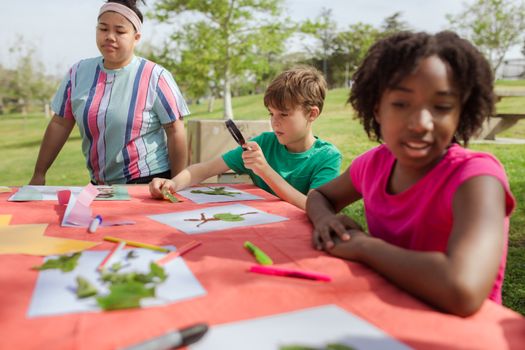 Photo: RDNE Stock project / Pexels
 Photo: Mikhail Nilov / Pexels
 Photo: Atlantic Ambience / Pexels
 Photo: Yan Krukau / Pexels