
Engaging Writing Prompts for Middle Schoolers: Boost Creativity

Teen girl writing notes in a pink notebook with headphones. Indoors setting.Photo: www.kaboompics.com / Pexels

Engaging Writing Prompts for Middle Schoolers: Boost Creativity

Ignite imagination and develop essential writing skills with a treasure trove of prompts designed specifically for young minds.

Start Writing Today!

Key Takeaways

  • ✓ Middle school is a crucial period for developing advanced writing skills.
  • ✓ Engaging prompts can transform reluctant writers into enthusiastic storytellers.
  • ✓ Writing helps middle schoolers process emotions and develop critical thinking.
  • ✓ Variety in prompts caters to diverse interests and learning styles.

How It Works

1
Choose a Prompt

Select a writing prompt that sparks interest or curiosity. Encourage exploration rather than perfection in the initial stages.

2
Brainstorm Ideas

Spend 5-10 minutes brainstorming keywords, concepts, or story arcs related to the prompt. This helps overcome writer's block.

3
Draft Freely

Encourage continuous writing without self-editing. The goal is to get ideas down on paper, focusing on flow and expression.

4
Refine and Share

Review the draft for clarity, grammar, and impact. Optionally, share with a trusted adult or peer for constructive feedback.

The Power of Engaging Writing Prompts for Middle Schoolers
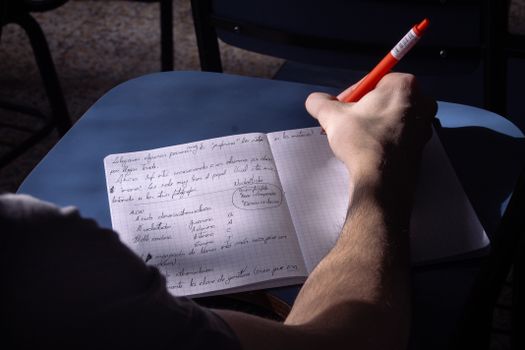
A student takes notes in a classroom in Buenos Aires. Natural lighting highlights the writing process.Photo: jessica olivella / Pexels
Middle school represents a pivotal stage in a young person's development, not just academically but also emotionally and socially. During these formative years, students are transitioning from concrete thinking to more abstract concepts, and their identities are rapidly evolving. Writing, often seen as a daunting task, can actually be a powerful tool for navigating this complex period. Engaging writing prompts for middle schoolers are not merely assignments; they are gateways to self-discovery, critical thinking, and imaginative exploration. They provide a structured yet flexible framework that allows young writers to experiment with language, express their unique perspectives, and develop a voice that is authentically their own. Without well-crafted prompts, writing can feel like a chore, a blank page staring back with an intimidating emptiness. However, with the right catalyst, that same blank page transforms into a canvas awaiting a masterpiece. So, what makes a writing prompt truly 'engaging' for a middle schooler? It's a combination of relevance, intrigue, and open-endedness. Prompts that connect to their lived experiences, their burgeoning interests, or even their wildest fantasies tend to resonate most deeply. They should avoid being too prescriptive, allowing ample room for individual interpretation and creative deviation. The best prompts act as jumping-off points, not rigid instructions. For instance, instead of merely asking them to describe their summer vacation, a more engaging prompt might be: "You discover a hidden portal in your backyard that leads to a world where summer never ends. Describe what you find there and one challenge you face." This immediately elevates the task from a simple recall exercise to an imaginative journey. Furthermore, writing serves as an invaluable practice for communication skills, which are essential for academic success and future careers. By regularly engaging with prompts, middle schoolers hone their ability to organize thoughts logically, articulate complex ideas clearly, and persuade an audience effectively. This practice extends beyond the classroom, helping them to structure arguments in debates, write compelling emails, and even express themselves more clearly in casual conversations. The developmental benefits are profound, fostering not just better writers but better thinkers and communicators. For more insights into fostering creativity in young minds, explore resources on creative learning strategies. Moreover, writing can be a therapeutic outlet for middle schoolers grappling with the emotional roller coasters of adolescence. Journaling, spurred by introspective prompts, offers a safe space to process feelings, reflect on experiences, and understand their own motivations. It can be a private dialogue, free from judgment, where they can explore fears, hopes, and anxieties. This self-reflection is critical for emotional intelligence and resilience. When students feel a sense of ownership over their writing, when they are genuinely invested in the topic, the quality of their work naturally improves. They become more attentive to detail, more deliberate in their word choice, and more ambitious in their narrative structures. The goal isn't just to produce a polished piece of writing, but to cultivate a love for the process itself, a recognition of writing as a powerful tool for understanding the world and their place within it. Therefore, providing a rich and varied selection of writing prompts for middle schoolers is not just a teaching strategy; it's an investment in their holistic growth and future success.

Unleashing Imagination: A Toolkit of Diverse Prompts

To truly unlock the creative potential of middle schoolers, a diverse toolkit of writing prompts is essential. Different types of prompts appeal to different interests and develop various facets of writing skill. We can categorize these into several types to ensure a well-rounded approach, ranging from fantastical narratives to real-world reflections. **Fantasy and Sci-Fi Prompts:** These are often among the most popular, as they allow students to escape the mundane and explore boundless possibilities. Middle schoolers are at an age where their imaginations are vivid and uninhibited. Prompts like "You wake up to find you've swapped bodies with your pet for a day. Describe your day from their perspective and what you learn," or "A mysterious ancient artifact appears in your school locker. What is it, and what powers does it possess?" encourage world-building, character development, and plot construction. They push students to think beyond conventional boundaries and invent new rules for their fictional universes. This type of writing also helps develop descriptive language as they strive to bring their fantastical worlds to life for the reader. **Realistic Fiction and Slice-of-Life Prompts:** While fantasy is fun, grounding writing in reality helps students observe and reflect on their own lives and the world around them. These prompts can be incredibly powerful for developing empathy and understanding human nature. Examples include: "Describe a moment when you felt truly proud of yourself or someone else," or "You overhear a secret conversation that changes your perception of someone you know. Write a short story about the immediate aftermath." These prompts encourage character analysis, dialogue writing, and the exploration of themes like friendship, conflict, and personal growth. They also foster observational skills, prompting students to pay closer attention to the nuances of human interaction and emotion. **Persuasive and Opinion-Based Prompts:** Developing strong argumentative skills is crucial for middle schoolers. These prompts challenge them to take a stance, support their arguments with evidence, and consider counterarguments. "Should middle schoolers have later start times? Argue for or against this proposal, citing reasons," or "Which technological invention has had the most significant impact on society, and why?" are excellent examples. These prompts help students structure logical arguments, use rhetorical devices, and understand the importance of clear, concise communication in advocating for a viewpoint. They also introduce the concept of audience and tailoring one's message to be most effective. **Poetry and Sensory Prompts:** Writing doesn't always have to be prose. Poetry prompts encourage students to experiment with language, rhythm, and imagery. "Write a poem about your favorite season, focusing on sensory details (sights, sounds, smells, feelings)," or "Choose an everyday object and write a poem giving it a voice and personality." These prompts enhance vocabulary, foster an appreciation for the aesthetic qualities of language, and encourage a deeper connection to their surroundings. They also help students understand metaphor, simile, and other poetic devices, enriching their overall literary comprehension. By engaging with these diverse categories, educators and parents can provide a comprehensive and stimulating writing experience for middle schoolers, ensuring they develop a broad range of skills and a lasting passion for writing.

Structuring Success: Integrating Prompts into Learning Routines

Integrating writing prompts for middle schoolers effectively into daily or weekly routines is key to maximizing their benefits. It's not enough to simply hand out a prompt; the context, timing, and follow-up are equally important. A structured approach ensures that writing becomes a consistent practice rather than an occasional activity, fostering growth over time. One highly effective strategy is to implement 'Writer's Workshop' models, even if informally. This involves dedicating a specific block of time – perhaps 15-30 minutes – several times a week solely for creative writing. During this time, students can select from a curated list of prompts or even generate their own, allowing for a sense of autonomy and ownership over their work. The consistency helps build stamina and makes writing less intimidating. Another successful method involves using prompts as warm-up activities or 'bell ringers' at the start of a class. A quick 5-10 minute free-write session on an engaging prompt can activate students' brains, get their creative juices flowing, and smoothly transition them into the day's learning. This low-stakes environment encourages experimentation without the pressure of a formal assignment. For instance, a prompt like, "If you could invent a new app that solves a problem in your school, what would it be and how would it work?" can serve as a stimulating start to a lesson on problem-solving or technology. This short, focused burst of writing helps students overcome initial inertia and develop the habit of putting thoughts onto paper regularly. Furthermore, incorporating peer feedback and revision cycles is crucial. After an initial draft, students can share their work with a partner or a small group, receiving constructive criticism. This not only hones their editing skills but also teaches them to articulate feedback respectfully and accept it graciously. Prompts that lend themselves to narrative development or character studies are particularly well-suited for this. For example, after writing a story based on the prompt, "A message in a bottle washes ashore, containing a plea from a future version of yourself. What does it say and what do you do?", students can critique each other's plot twists or character motivations. This collaborative process transforms writing from a solitary act into a community endeavor, reinforcing the idea that writing is a process of continuous improvement. For deeper understanding of effective feedback strategies, consider exploring resources on collaborative learning techniques. Finally, celebrating student writing, even small achievements, is paramount. Displaying exceptional pieces, creating a class anthology, or simply offering specific, positive reinforcement can significantly boost confidence and motivation. Acknowledging effort and progress, rather than just perfection, encourages students to take risks and embrace challenges. By making writing prompts a dynamic and integrated part of the learning experience, educators and parents can cultivate not just better writers, but more confident, creative, and critical thinkers who are prepared for academic success and beyond. The structure provides the necessary scaffolding, but the true magic lies in the freedom and encouragement to explore.

Avoiding Common Pitfalls and Maximizing Impact

While writing prompts for middle schoolers are incredibly beneficial, their effectiveness can be hindered by common pitfalls. Recognizing and avoiding these can significantly enhance the learning experience and foster a genuine love for writing. One major mistake is over-correction or excessive focus on grammar and spelling in the initial drafting stages. When students are first putting their ideas down, the priority should be flow and content. Interrupting this creative process with constant red marks can stifle imagination and make writing feel like a punishment. Instead, encourage free-flowing thought during the first draft, saving detailed editing for later stages. A separate 'editing' phase allows students to shift their focus from creation to refinement, making the process less intimidating. Another pitfall is offering prompts that are too restrictive or too broad. A prompt like "Write about a dog" is too broad and can leave students feeling overwhelmed by options, leading to writer's block. Conversely, "Write a story about a golden retriever named Sparky who saves a cat from a tree using a ladder and then bakes cookies" is too specific, leaving no room for creativity. The sweet spot lies in prompts that offer a clear starting point or intriguing premise but allow for multiple directions and interpretations. The goal is to spark an idea, not dictate the entire narrative. A good balance ensures engagement without stifling original thought. **Tips for Maximizing Impact:** * **Offer Choice:** Provide several prompts and let students choose the one that resonates most with them. Choice increases engagement and ownership. * **Model Expectations:** Occasionally, share your own short responses to a prompt or an example from a published author to illustrate what's possible. This can inspire and clarify expectations. * **Vary Prompt Types:** Rotate between narrative, descriptive, persuasive, and reflective prompts to develop a range of writing skills. * **Connect to Current Events/Interests:** Tailor some prompts to current events, popular culture, or topics that are already sparking discussion among middle schoolers. This increases relevance. * **Provide Time for Pre-Writing:** Encourage brainstorming, outlining, or mind-mapping before students begin writing. This helps organize thoughts and reduces anxiety. * **Focus on Process, Not Just Product:** Emphasize that writing is a process of drafting, revising, and editing. Celebrate effort and improvement, not just polished final pieces. * **Create a Safe Sharing Environment:** Encourage students to share their work in a supportive, constructive environment where feedback is positive and helpful, not critical. By being mindful of these common errors and implementing these tips, educators and parents can transform writing prompts from simple assignments into powerful tools for developing confident, articulate, and imaginative middle school writers. The objective is to cultivate a positive relationship with writing that extends far beyond the classroom.

Comparison

FeatureBest Option (Open-Ended Narrative)Alternative 1 (Specific Scenario)Alternative 2 (Reflective Question)
Creativity EncouragedHighMediumHigh
Structure ProvidedMediumHighLow
Personal ConnectionMediumLowHigh
Ease of Starting
Skill FocusNarrative, DescriptionPlot, CharacterAnalysis, Argument

What Our Readers Say

5 ★★★★★

"These writing prompts have been a game-changer for my 7th grader! She used to dread writing, but now she actually looks forward to picking a prompt and letting her imagination run wild. It's fantastic to see her develop."

5 ★★★★★

"As a middle school English teacher, finding genuinely engaging prompts is tough. This collection offers such a great variety, covering different genres and thought processes. My students are producing much more thoughtful and creative work."

5 ★★★★★

"My son, who is usually glued to video games, actually spent an hour writing a short story based on one of these prompts. The quality of his writing has visibly improved, and he's more confident expressing his ideas."

4 ★★★★☆

"The prompts are generally excellent, though a few were a bit too abstract for some of my more literal-minded students. However, the sheer volume and diversity still make this an invaluable resource for fostering creativity."

5 ★★★★★

"I use these with my homeschool group, and they love the freedom these prompts offer. It's not just about writing; it's about critical thinking and exploring new ideas. Highly recommend for any parent or educator."

Frequently Asked Questions

What is the best age range for these writing prompts for middle schoolers?
These prompts are specifically designed for students typically aged 11-14, encompassing grades 6-8. The themes and complexity are tailored to their developmental stage, encouraging both imaginative exploration and the development of more sophisticated writing skills appropriate for this age group.
My middle schooler struggles with writer's block. How can these prompts help?
Many of these prompts offer a clear starting point or an intriguing 'what if' scenario, which acts as a powerful antidote to the blank page. By providing a creative spark, they reduce the pressure of coming up with an idea from scratch, allowing your middle schooler to focus on developing the story or argument.
How often should my child use writing prompts?
Consistency is key. Aim for 2-3 times per week, even if it's just for 15-20 minutes. Regular practice helps build writing stamina, confidence, and makes the writing process feel less daunting. Short, frequent sessions are more effective than infrequent, long ones.
Do I need special materials to use these writing prompts?
Not at all! All you need is a pen and paper, or a computer/tablet. The focus is on the ideas and the act of writing, not fancy tools. However, a dedicated journal can help foster a sense of ownership and encourage regular writing.
Are these prompts suitable for different learning styles?
Yes, the diverse range of prompts (narrative, descriptive, persuasive, reflective) is designed to appeal to various learning styles. Some students might thrive with imaginative scenarios, while others prefer prompts that allow for personal reflection or logical argumentation, ensuring there's something for everyone.
Who should use writing prompts for middle schoolers?
These prompts are ideal for middle school students themselves, their parents looking to support at-home learning, and educators seeking engaging classroom activities. They are also great for homeschooling environments or after-school enrichment programs focusing on literacy and creative development.
Will these prompts help with school assignments?
Absolutely! By regularly engaging with these prompts, middle schoolers will improve their descriptive language, organizational skills, ability to construct arguments, and overall written expression – all foundational skills directly transferable to school essays, reports, and creative writing assignments.
What's the future trend for creative writing in education?
The trend is moving towards more personalized, choice-driven, and interdisciplinary approaches. Creative writing, supported by engaging prompts, will increasingly be seen as crucial for developing critical thinking, emotional intelligence, and communication skills essential for the evolving demands of the 21st century.

Empower your middle schooler to explore new worlds, articulate their thoughts, and discover the joy of creative expression. Dive into our extensive collection of writing prompts for middle schoolers today and watch their confidence and skills soar. Start their writing adventure now!

Topics: writing prompts for middle schoolerscreative writing middle schoolmiddle school writing activitiesjournaling for teensstory starters for kids
Leo List
Brampton weed
Adultwork