Key Differences Between Public and Private Schools
differences between public and private schools

Key Differences Between Public and Private Schools

Understand the core distinctions in funding, curriculum, and environment to choose the best educational path for your family.

Find Your Best Fit

Key Takeaways

  • ✓ Public schools are government-funded and free, while private schools are funded by tuition and donations.
  • ✓ Private schools often have smaller class sizes and lower student-to-teacher ratios.
  • ✓ Public schools must adhere to state and federal curricula, whereas private schools have more curricular flexibility.
  • ✓ Specialized programs (arts, sports, STEM) can be highly developed in both, but private schools may offer more unique or niche options.

How It Works

1
Understand Funding & Cost

Public schools are funded by taxes and are tuition-free. Private schools rely on tuition, endowments, and donations, incurring significant costs for families.

2
Evaluate Curriculum & Pedagogy

Public schools follow state-mandated standards. Private schools have greater autonomy to design unique curricula, often focusing on specific philosophies or religious affiliations.

3
Consider Class Size & Resources

Private schools typically boast smaller class sizes, leading to more individualized attention. Public schools, while larger, often have extensive resources like libraries, labs, and sports facilities.

4
Assess Extracurriculars & Community

Both offer a range of activities, but private schools might have more niche options due to specialized funding. Public schools foster a diverse community reflecting the local population.

Funding, Cost, and Access: The Financial Distinctions in Education
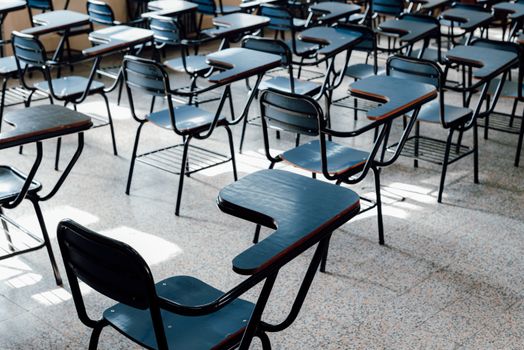
Rows of empty desks in a bright Buenos Aires classroom, symbolizing education and learning environment. Photo: Alex Dos Santos / Pexels
One of the most fundamental differences between public and private schools lies in their funding mechanisms and, consequently, the cost to families. Public schools in the United States are primarily funded by local, state, and federal taxes. This means that they are tuition-free for all residents within their geographical district. The allocation of these funds is often dictated by government regulations, ensuring a baseline of resources for all students. This model aims to provide equitable access to education regardless of a family's socioeconomic status, embodying the principle of universal access to a quality education. Private schools, on the other hand, operate independently of government funding. Their financial model relies heavily on tuition fees paid by students' families, alongside donations, endowments, and fundraising efforts. This independent funding grants private schools significant autonomy over their budgets, allowing them to invest in specific programs, facilities, or staffing ratios as they see fit. However, this comes at a substantial cost to parents, with tuition fees ranging from a few thousand dollars to upwards of $60,000 per year, depending on the school's location, reputation, and offerings. While many private schools offer scholarships and financial aid to help mitigate these costs, access can still be a significant barrier for many families. The financial structure also impacts resource allocation. Public schools, with their larger student bodies and often more diverse needs, must distribute resources across a broad spectrum of programs and services, from special education to advanced placement courses. They are also subject to budget constraints and political fluctuations that can directly affect their funding. Private schools, with their tuition-based model, can often make more targeted investments. For example, a private school might choose to invest heavily in state-of-the-art science labs, a robust arts program, or a lower student-to-teacher ratio, directly reflecting the values and priorities of its community and benefactors. This distinction in funding fundamentally shapes the resources available, the programs offered, and ultimately, the educational experience for students in both systems. Understanding these financial underpinnings is the first crucial step in evaluating which school environment might be a better fit for your child's educational journey.

Curriculum, Pedagogy, and Class Environment: Shaping Learning Experiences

Group of schoolchildren in uniform engaging with teachers outdoors, fostering learning. Photo: Anh Tuấn Lê / Pexels
Beyond funding, the differences between public and private schools are profoundly evident in their curriculum, pedagogical approaches, and the overall classroom environment. Public schools in the US are mandated to follow state-approved curricula and adhere to federal educational standards, such as those outlined by the No Child Left Behind Act or the Every Student Succeeds Act. This standardization ensures a consistent level of education across districts and prepares students for standardized testing. While this provides a strong foundation, it can sometimes limit a public school's flexibility to innovate or specialize in niche academic areas. Teachers in public schools often work within larger class sizes, which can necessitate more whole-group instruction and less individualized attention per student. Private schools, conversely, enjoy significant autonomy over their curriculum design. This freedom allows them to tailor their educational programs to specific philosophies, such as Montessori, Waldorf, or religious doctrines. Some private schools might specialize in STEM, arts, or a particular language, offering a depth of study that public schools, due to their broad mandate, might not be able to match. This curricular flexibility also extends to pedagogical methods; private schools can experiment with innovative teaching techniques, interdisciplinary studies, or project-based learning without the same governmental oversight. The smaller class sizes, often a hallmark of private institutions, facilitate more personalized instruction, one-on-one interaction between students and teachers, and a greater opportunity for differentiated learning to meet individual student needs. This intimate setting can foster a strong sense of community and allow teachers to truly understand each student's learning style and progress. The classroom environment also varies. Public schools, by nature, are microcosms of the broader community, enrolling students from diverse socioeconomic, cultural, and academic backgrounds. This diversity can be a significant advantage, exposing students to a wide range of perspectives and preparing them for a multicultural world. Private schools, while increasingly focusing on diversity, may sometimes have a more homogenous student body, depending on their admissions criteria and tuition costs. However, they often cultivate a strong school culture built around shared values, academic rigor, or a specific mission. The choice between these environments often comes down to a family's priorities: whether they value a standardized, diverse experience or a specialized, more personalized approach with a distinct cultural identity.

Extracurriculars, Resources, and Community: Beyond the Classroom Walls
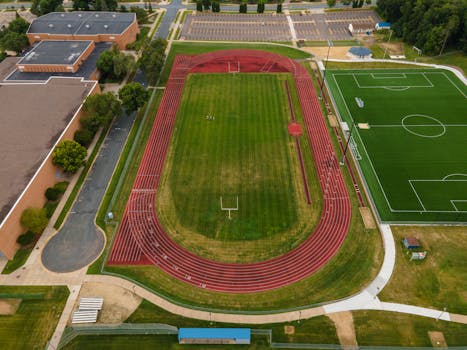
Aerial view of track and soccer field in Menomonie, WI, showcasing sports facilities from above. Photo: Chris Flaten / Pexels
The differences between public and private schools extend well beyond academics into the realm of extracurricular activities, available resources, and the overall community environment. Public schools, particularly larger ones, often boast an extensive array of extracurricular programs. Due to their size and public funding, they can typically offer a wide variety of sports teams, clubs (from chess to debate to robotics), and performing arts programs (band, choir, theater). These programs are often supported by community involvement and can benefit from a larger pool of student talent and interest. Public schools also frequently have impressive facilities, including large gymnasiums, athletic fields, libraries, and science labs, though the quality and modernization of these facilities can vary significantly by district and funding levels. The sheer scale of public education allows for a broad spectrum of opportunities, ensuring that almost every student can find an activity that aligns with their interests, fostering a sense of belonging and community among a diverse student body. Private schools, while sometimes smaller in scale, often compensate with highly specialized and well-funded extracurricular offerings. For instance, a private school might have a renowned equestrian program, a dedicated arts conservatory, or a highly competitive robotics team with cutting-edge equipment. The focus is often on quality and depth within specific areas, rather than breadth. Their smaller student bodies can mean more opportunities for individual students to participate and excel in multiple activities, as competition for spots might be less intense than in a large public school. Furthermore, private schools often have more modern facilities, smaller class sizes, and a higher student-to-teacher ratio, allowing for more individualized attention and a more tailored educational experience. Many private schools also have robust college counseling departments, offering extensive guidance through the application process, which can be a significant draw for college-bound students. The community aspect also differs. Public schools inherently reflect the diversity of their local neighborhoods, providing students with exposure to a wide range of backgrounds, cultures, and socioeconomic statuses. This can be invaluable for developing social awareness and preparing students for a diverse world. Private schools, while often striving for diversity, may still attract a more homogenous student population due to tuition costs or specific admissions criteria. However, they often cultivate a very strong, tight-knit community, sometimes extending to alumni networks that can provide valuable connections later in life. The choice here often hinges on whether a family values broad community exposure and a vast array of options, or a more curated, specialized environment with a strong, perhaps more focused, community identity.

Making the Right Choice: Tips for Evaluating Public vs. Private Schools

A smiling teacher assists a young girl with a colorful educational activity at a classroom table. Photo: Mikhail Nilov / Pexels
Deciding between public and private education is a significant decision for any family. It’s not about one being inherently 'better' than the other, but rather which environment is the 'best fit' for your unique child and family values. Here are some key tips and considerations to guide your evaluation process: * **Define Your Priorities:** Before you even begin looking, sit down and list what matters most to your family. Is it academic rigor, a specific religious upbringing, specialized programs (arts, STEM, sports), diversity, class size, or cost? Having a clear understanding of your priorities will help filter your options. * **Research Local Options Thoroughly:** Don't rely solely on reputation. For public schools, investigate district ratings, test scores, graduation rates, and available magnet or specialized programs. For private schools, look into their academic philosophy, accreditation, and college matriculation rates. Utilize online resources, school websites, and parent forums. * **Visit Schools and Observe:** Schedule tours and, if possible, arrange for your child to shadow a student for a day. Pay attention to the atmosphere, teacher-student interactions, classroom engagement, and overall school culture. Do the students seem happy and engaged? Does the environment feel welcoming and safe? * **Talk to Parents and Teachers:** Seek out current parents and teachers from both public and private schools you're considering. Ask about their experiences, the school's strengths and weaknesses, communication with parents, and how the school handles challenges. Their firsthand perspectives can offer invaluable insights. * **Consider Your Child's Personality and Learning Style:** Is your child self-motivated and thrives in larger, more independent settings, or do they benefit from more individualized attention and a structured environment? Do they need specific support services or advanced opportunities that one type of school might offer more readily? * **Evaluate Extracurriculars and Support Services:** Look beyond academics. What clubs, sports, or arts programs are available? Does the school offer strong college counseling, academic support, or mental health resources? These aspects are crucial for holistic development. * **Financial Realism (for Private Schools):** If considering private school, have an honest discussion about the financial commitment. Factor in not just tuition, but also uniforms, books, fees for activities, and transportation. Explore scholarship and financial aid options early in the process. * **Think Long-Term:** While focusing on immediate needs, consider how the school might prepare your child for future education and life. Does it foster critical thinking, resilience, and a love of learning? By systematically evaluating these factors, you can move beyond broad generalizations and identify the educational setting that genuinely aligns with your child's needs and your family's aspirations.

Comparison

FeaturePublic Schools (Typical)Private Schools (Typical)
Funding SourceGovernment (taxes)Tuition, donations, endowments
Cost to FamiliesFree (tuition)Significant tuition fees
CurriculumState/federal standardsFlexible, specialized, or religious
Class SizeLarger (20-30+ students)Smaller (10-20 students)
Teacher AutonomyModerateHigh
Student DiversityHigh (community reflection)Variable (can be more homogenous)
Special ProgramsBroad range, varies by districtSpecialized, niche, or religious focus
FacilitiesExtensive, varies by districtOften modern, specialized
Admissions ProcessDistrict residencyApplication, interviews, tests
Religious Affiliation✗ (secular)✓ (often)

What Readers Say

"Understanding the differences between public and private schools was key for us. Our daughter thrived in a private school with smaller classes and a specific arts focus that her public school couldn't match."

Sarah J. · Austin, TX

"We chose public school for our son because of the incredible diversity and the wide range of free extracurriculars. The social exposure has been invaluable, and the teachers are dedicated."

Mark T. · Seattle, WA

"The individualized attention at our private school made all the difference for our child with a learning difference. The smaller class sizes and tailored approach led to a significant improvement in her confidence and grades."

Emily R. · Boston, MA

"While we appreciate the resources of our local public high school, we sometimes wish for more specialized academic pathways. The sheer size can make it hard for some students to stand out, but the community spirit is fantastic."

David L. · Denver, CO

"The religious instruction and strong moral framework offered by our private school were paramount for our family. It's truly a community that reinforces our values, which is a major difference from the public options."

Jessica M. · San Francisco, CA

Frequently Asked Questions

What is the main financial difference between public and private schools?

The primary financial distinction is funding. Public schools are government-funded through taxes and are tuition-free for residents. Private schools are independently funded by tuition fees, donations, and endowments, meaning families must pay for attendance.

Are private schools always better academically than public schools?

Not necessarily. Academic quality varies greatly within both systems. While private schools often boast smaller class sizes and specialized curricula, many public schools offer excellent academic programs, including advanced placement courses and gifted programs, often with more diverse student bodies.

How do I choose between a public and private school for my child?

Start by identifying your family's priorities regarding academics, cost, school culture, religious affiliation, and extracurriculars. Then, research local options, visit schools, talk to current parents, and consider your child's personality and learning style.

Is the higher cost of private school worth it?

The value of private school tuition is subjective and depends on individual family needs and financial capacity. For some, the specialized programs, smaller class sizes, and specific school culture justify the investment. For others, a high-quality public education provides excellent value without the financial burden.

Do public and private schools differ in extracurricular offerings?

Yes, but both can be robust. Public schools often have a wider variety of sports and clubs due to larger student populations. Private schools might offer more specialized or niche programs, often with higher-quality facilities or dedicated coaching due to their funding and focus.

Who should consider public schools?

Public schools are an excellent option for families seeking a tuition-free education, a diverse student body, a broad range of extracurricular activities, and an environment that reflects their local community. They are also ideal for students who thrive in larger settings with diverse learning opportunities.

Are private schools safer than public schools?

Safety is a priority in all schools, but perceptions can differ. Private schools, often with smaller campuses and controlled access, might feel more secure to some. Public schools, however, have robust safety protocols, school resource officers, and emergency plans. It's crucial to research the specific safety measures of any school you're considering.

What future trends might impact the differences between public and private schools?

Future trends include increasing integration of technology in both settings, a growing focus on personalized learning (which may narrow the class-size gap), and evolving funding models. Public schools might see more specialized programs, while private schools could emphasize diversity and accessibility through expanded financial aid.

Navigating the differences between public and private schools is a journey unique to every family. By understanding these key distinctions and aligning them with your child's needs and your family's values, you can confidently choose an educational path that fosters growth, learning, and success. Start exploring your options today to find the perfect fit.

Topics: differences between public and private schoolspublic vs private educationschool choice USAprivate school benefitspublic school advantages
Leo List

DK Escorts LU Escorts AT Escorts SE Escorts FI Escorts CH Escorts DE Escorts HR Escorts IE Escorts GR Escorts CZ Escorts NO Escorts BE Escorts FR Escorts SI Escorts IL Escorts NL Escorts PL Escorts HU Escorts ES Escorts IT Escorts PT Escorts SK Escorts RO Escorts ZA Escorts UY Escorts US Escorts UK Escorts NZ Escorts AU Escorts
Brampton weed
Adultwork EstrelaBet Vai de Bet R7 Bet Betão Galera Bet Rainbet Bet9ja Shop SportyBet BetKing Sisal Loto Foot Hollywoodbets YesPlay Odibets RushBet Jugabet BetWarrior BetCity MSport betPawa Fortebet